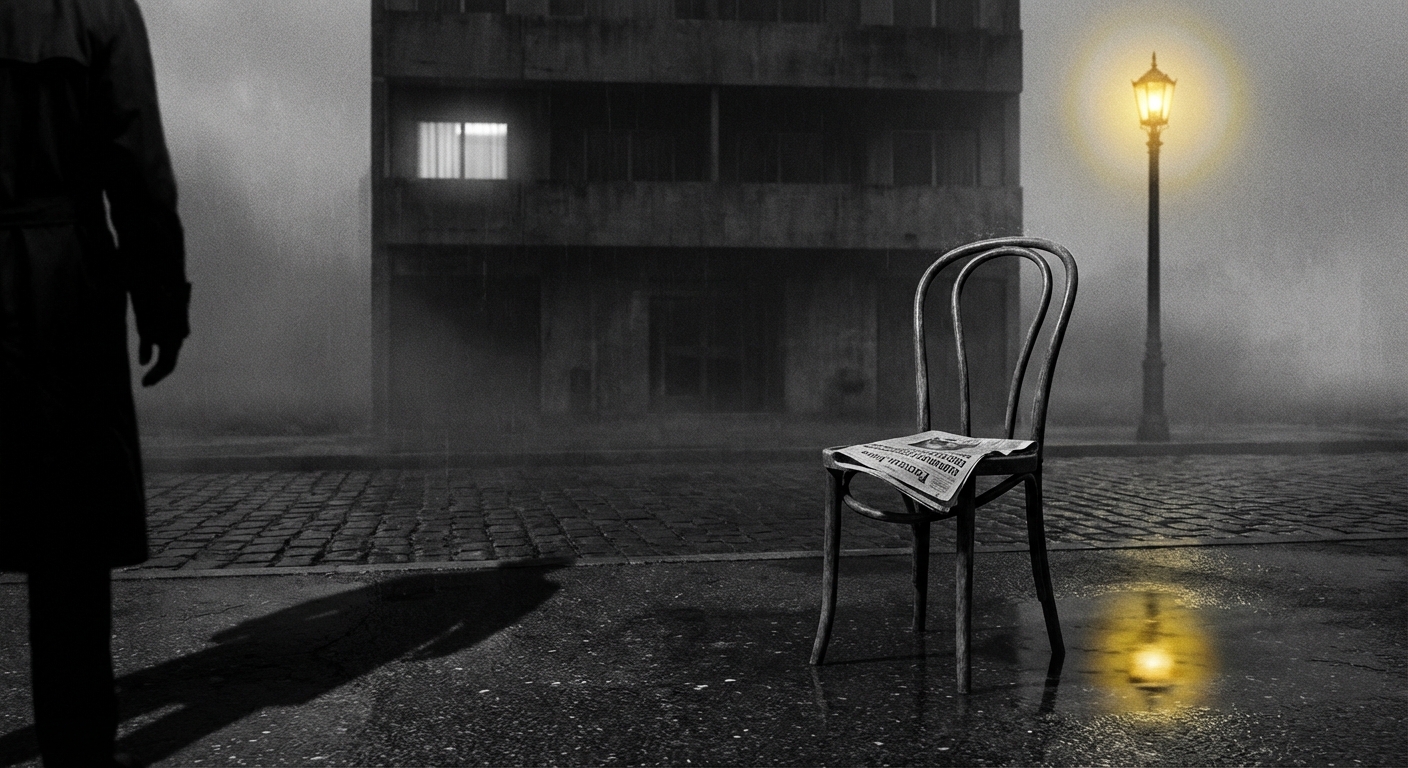
The Morning He Did Not Wait
On 18 September 2006, a 76-year-old retired bricklayer named Jorge Julio López left his home in the Los Hornos neighbourhood of La Plata, in Buenos Aires Province, and was never seen again. **It was the morning before the verdict in Argentina's most watched human rights trial in decades.** His nephew was supposed to pick him up. López did not wait.
He walked out the door alone. A man who had already survived three years of torture inside the clandestine detention centres of a military dictatorship vanished for the second time in his life — this time in a democratic country, on a quiet residential street, in broad daylight.
No body has ever been found. No one has been convicted. The case remains open.
Established Record: A Life Defined by Surviving
Jorge Julio López was born in 1929. He was a construction worker, a Peronist activist, and an unremarkable man by most measures — the kind of person that history does not usually remember. **But Argentina's Dirty War made him a witness to atrocities that governments prefer to forget.**
On 27 October 1976, less than a year after the military coup that brought General Jorge Videla to power, López was abducted by provincial police. He was taken to a series of clandestine detention centres — among them the infamous Pozo de Banfield, the Pozo de Quilmes, and the Coti Martínez facility — where he was subjected to systematic torture. Electric cattle-prods. Simulated drownings. The full machinery of state terror.
His torturer, on multiple documented occasions, was **Miguel Osvaldo Etchecolatz**, the Director General of Investigations of the Buenos Aires Provincial Police. López later recalled watching Etchecolatz personally execute at least five prisoners. He was held without charge, without trial, and without acknowledgment that he was alive — one of Argentina's estimated 30,000 *desaparecidos*.
He was released on 25 June 1979. Somehow.
When democracy returned in 1983, López did what most survivors chose not to do: he talked. He gave testimony. He put his name on record against men who still walked free and, in many cases, still held positions of influence within Argentina's police and military apparatus.
The Trial That Changed Everything
For decades after the return of democracy, Argentina's amnesty laws — the Ley de Punto Final and Ley de Obediencia Debida — shielded most perpetrators of the Dirty War from prosecution. It was not until 2003, under President Néstor Kirchner, that Congress annulled these laws, reopening the door to prosecutions.
Miguel Etchecolatz was among the first to face trial under the new framework. Beginning in June 2006, the case against him proceeded before a federal tribunal in La Plata. **The charges included kidnapping, torture, and the murder of six people.** The trial was historic: it would be the first time an Argentine court explicitly framed Dirty War crimes as "genocide."
Jorge Julio López was a key witness. He sat before the court and identified Etchecolatz as the man who had directed his own torture sessions. He described the clandestine centres in detail. His testimony was said to have implicated **62 military and police personnel**. Other survivors corroborated his account.
Etchecolatz's legal team attacked López's credibility. His memory. His motives. López, an elderly man with no formal education, held firm under cross-examination.
- 18 September 2006: López fails to appear at court for a final session.
- 19 September 2006: Etchecolatz is convicted and sentenced to life imprisonment. The court calls his crimes "crimes against humanity in the context of genocide" — the first time that language had been used in Argentine jurisprudence.
López had vanished the day before the verdict he helped deliver.
The Detail Everyone Overlooks: The Note
During the 2014 trial of Etchecolatz and fourteen others for crimes committed at the La Cacha clandestine detention centre, something extraordinary happened. As the judge read out the sentences, Etchecolatz — already serving a life term — reached for a piece of paper and wrote two words on it:
**"Jorge Julio López."**
He held it up. No explanation. No statement. Just the name.
Prosecutors and human rights organisations interpreted this as a deliberate provocation — or worse, a confession of involvement. Etchecolatz never elaborated. He died in prison in **2022**, taking whatever he knew to his grave. The gesture remains one of the most chilling and unresolved details in the entire case.
Evidence Examined
The physical evidence in the López case is frustratingly sparse.
**What is known:**
- López was last seen leaving his home the morning of 18 September 2006. His nephew, Rubén, arrived to pick him up and found him gone.
- He had no history of mental illness, dementia, or any condition that would explain disorientation.
- His pension payments stopped. His routine — which included regular contact with his family — abruptly ceased.
- No witnesses came forward who definitively saw him board public transport, enter a vehicle, or encounter anyone.
**The Falcone lead:** In 2010, investigators focused on **Carlos Osvaldo Falcone**, a retired police doctor who had visited Etchecolatz in prison twice in the weeks before López disappeared — at Etchecolatz's explicit request. A vehicle registered to Falcone's address was reported to have been used in the abduction. Falcone was questioned but never charged.
**The Quijano lead:** Also in 2010, **Oscar Raúl Quijano** was charged with illegal arms possession and trafficking. Investigators had placed him near the home of human rights activist Chicha Mariani on the same day and in close proximity to López. The arms charge did not translate into charges related to the disappearance.
**2011 tip:** A witness claimed López's body had been buried in a railway station in the Pereyra Iraola forest complex. An investigation determined the witness was unreliable. No remains were found.
**2021 exhumation effort:** Argentine prosecutors ordered a survey of 66 unidentified graves in the La Plata municipal cemetery, cross-referencing DNA with López's genetic profile.
**2024 discovery:** Municipal workers in La Plata uncovered **501 coffins and more than 2,000 bags of unidentified human remains** in the cemetery. López's family immediately petitioned the court for a court-ordered DNA comparison against all of them. As of early 2026, results have not been publicly disclosed.
Investigation Under Scrutiny
The official investigation has been criticised from multiple angles for nearly two decades.
**No witness protection:** López received no formal protection despite being the star witness in a genocide trial. The Argentine government acknowledged after his disappearance that no security protocols had been established for him. **This failure was systematic, not incidental.** Other witnesses in dictatorship-era trials had also reported feeling surveilled and intimidated in the lead-up to their testimonies.
**Institutional contamination:** Human rights organisations, including the Centre for Legal and Social Studies (CELS) and Amnesty International, alleged that active and retired provincial police officers — some with direct ties to personnel accused in the dictatorship-era crimes — had disrupted the investigation. Argentina's Buenos Aires Province police force was the same institution that had operated many of the clandestine detention centres in the 1970s. Many of its personnel had served continuously from the dictatorship into the democratic era.
**Millions of phone records, no prosecution:** Investigators collected millions of telephone records from the period surrounding López's disappearance. After years of analysis, no prosecution resulted.
**Political dimension:** The disappearance occurred during the presidency of Néstor Kirchner, who had staked his political identity on pursuing accountability for Dirty War crimes. The failure to resolve the López case was an acute embarrassment — and some critics argued that the government's incentive to pursue perpetrators within its own police and security apparatus was structurally limited.
Suspects and Theories
Theory 1: Organised Abduction by Dictatorship Networks
The dominant theory — shared by most human rights organisations and many investigators — is that **remnant networks of the former dictatorship, operating within or alongside the Buenos Aires Provincial Police, orchestrated López's disappearance.** The motive: to punish him for testifying, and to send a message to other witnesses about the cost of speaking against former security personnel.
Supporting this theory:
- The timing, one day before the verdict, suggests foreknowledge of the trial's outcome.
- Etchecolatz's written note in 2014 is widely read as a signal of complicity.
- Falcone's prison visits to Etchecolatz weeks before the disappearance suggest coordination.
- López had reportedly told family members in the weeks before his disappearance that he feared he was being followed.
Theory 2: Spontaneous Disappearance or Accident
Initially proposed by authorities as a possibility — that López, traumatised by reliving his torture during testimony, had wandered off in a confused state. **This theory was formally discarded** by investigators. López had no documented cognitive impairment, and his disappearance was too abrupt and total for an accidental wandering to go undetected.
Theory 3: Voluntary Hiding
Also initially raised: that López had gone into hiding out of fear, without telling his family. **This too was discarded.** His family relationships were close, his finances were dependent on his pension, and there was no evidence of advance preparation for an extended disappearance.
What Etchecolatz's Silence Means
Etchecolatz accumulated nine life sentences before his death in 2022. He never once provided information about López's fate. Prosecutors argued he almost certainly knew — that the written note in 2014 was not a taunt but a declaration. Whether Etchecolatz ordered the disappearance directly, facilitated it through intermediaries, or simply possessed knowledge of who did it died with him.
Where It Stands Now
In September 2024, on the 18th anniversary of López's disappearance, the National University of La Plata unveiled a commemorative plaque in his honour. Hundreds marched through La Plata carrying photographs. His family stood at the front.
The DNA comparison of the 2024 La Plata cemetery remains is ongoing. Investigators continue to work through the telephone metadata. The case file, now nearly 20 years old, is one of the longest-running unsolved disappearances in post-dictatorship Argentina.
**Jorge Julio López disappeared twice.** The state failed to protect him both times — first when it was the state doing the abducting, and again when a democratic government could not or would not shield the man whose testimony was helping to hold the past accountable.
No one has been convicted of his second disappearance. No remains have been positively identified. The case is, officially, open.
证据评分卡
Physical evidence is nearly absent — no body, no confirmed forensic link to the abduction scene, no vehicle forensics confirmed in court.
Witness accounts from López's family are credible and consistent, but no independent eyewitnesses to the abduction itself have ever come forward.
The investigation was critically compromised from the outset by institutional conflicts of interest within the Buenos Aires Provincial Police, which conducted the initial inquiry.
The 2024 remains discovery in La Plata represents the most viable path to resolution, but results have not been publicly confirmed; the death of the primary suspect Etchecolatz in 2022 removed the most likely source of direct testimony.
The Black Binder分析
Analytical Assessment
Why This Case Is Different
The disappearance of Jorge Julio López is not simply an unsolved missing person case. It is a stress test of democratic accountability — one that Argentina demonstrably failed. López vanished in 2006, more than two decades after the return of civilian government. The Dirty War had officially ended in 1983. The perpetrators were, at least nominally, subject to the rule of law. And yet the most dangerous man in the most important human rights trial Argentina had prosecuted was left to walk unescorted to his own disappearance.
This case forces a question that remains unanswered: **Did the Argentine state fail López through incompetence, or through the quiet complicity of personnel who still had loyalties to the old order?**
The Institutional Problem
The Buenos Aires Provincial Police — known colloquially as the Bonaerense — operated many of the clandestine detention centres during the Dirty War. It was never meaningfully purged. Officers who served under the dictatorship transitioned into the democratic police force with their ranks, their networks, and their allegiances intact. By 2006, many had retired but remained connected to active personnel.
When López disappeared, it was the Bonaerense that conducted the initial investigation. Human rights lawyers immediately raised alarm about an institutional conflict of interest so fundamental that no credible investigation could proceed through that channel. Their concerns were documented, acknowledged — and largely unaddressed.
This structural contamination explains why, despite millions of telephone records, multiple persons of interest, and decades of investigation, no prosecution for the disappearance itself has resulted.
The Intimidation Effect
If the goal of López's abduction was to silence other witnesses and slow the momentum of the dictatorship-era trials, it failed in its immediate objective — the trials continued. But the chilling effect on individual witnesses was real and documented. Human rights lawyers reported that several survivors became significantly more reluctant to testify openly after September 2006. Some requested police protection; others withdrew from proceedings entirely.
In this sense, whoever took López achieved something: the restoration of a fear that Argentina's human rights movement had spent twenty years trying to overcome.
The Etchecolatz Note
The 2014 written note — "Jorge Julio López" — is the single most underanalysed piece of evidence in this case. Courts treated it as a provocation; human rights groups treated it as a confession. But neither framing captures its full significance.
Etchecolatz wrote it at the precise moment he was receiving another life sentence. It was a controlled, deliberate act under maximum public scrutiny. That he chose López's name in that moment suggests not grief, not regret, but ownership. He was declaring something about his relationship to the disappearance. Whether that means he ordered it, blessed it, was informed of it, or simply knew who did it remains the central unanswered question.
The 2024 Remains Discovery
The discovery of thousands of unidentified remains in the La Plata municipal cemetery in early 2024 introduced the most concrete investigative development in years. If DNA testing confirms that any of those remains belong to López, it would immediately reframe the investigation: from a missing persons case to a homicide, with a geographic footprint pointing toward La Plata's institutional structures.
The fact that the results have not been publicly disclosed as of early 2026 is itself notable. It suggests either ongoing forensic complexity, or a result that requires careful legal handling before public announcement.
Solvability
With Etchecolatz dead, the most plausible direct link to an organising intelligence behind the disappearance is gone. What remains are secondary figures — Falcone, Quijano, and unnamed others whose identities the telephone record analysis may or may not have yielded. The 2024 remains discovery is the most live thread. If López's identity is confirmed in those remains, forensic pathology may be able to establish manner of death and potentially narrow the geographic and temporal profile of who had access to the cemetery.
侦探简报
You are reviewing the cold file of Jorge Julio López, 76 years old, retired bricklayer, La Plata, Argentina. Last seen 18 September 2006. Here is what you know for certain: López was the key witness against a man convicted of genocide the following day. He had no documented health issues that would explain wandering. He told family members in the weeks before his disappearance that he believed he was being followed. He did not wait for his nephew. He was never seen again. The investigation identified two persons of serious interest. A retired police doctor made two prison visits to the convicted torturer in the weeks before the disappearance, at the torturer's explicit request. A retired police officer was photographed near the home of a prominent human rights activist on the same day and in proximity to López. Neither was ever charged with the disappearance. In 2014, the convicted torturer, at the moment he received another life sentence in a separate trial, wrote López's name on a piece of paper and displayed it publicly. He never explained this act. He died in 2022. In early 2024, more than 2,000 bags of unidentified human remains were discovered in the La Plata municipal cemetery. López's family immediately requested a DNA comparison. Results have not been publicly released. Your task: determine whether the 2014 note is an admission, a taunt, or a signal to others still alive. Determine who had both the motive and the operational capacity to abduct a man from a residential street without witnesses. And ask yourself why, despite millions of telephone records collected in 2006, no prosecution for the disappearance has ever resulted — and whether that silence is investigative failure, or something else.
讨论此案件
- If Etchecolatz wrote López's name in 2014 as an act of deliberate communication rather than provocation, who was the intended audience — the court, surviving network members, or López's family?
- Given that the Buenos Aires Provincial Police was the same institution that operated the clandestine detention centres in the 1970s, was a credible investigation into López's disappearance structurally possible from the beginning?
- The 2024 discovery of thousands of unidentified remains in La Plata's municipal cemetery was a major forensic development — why has this finding received almost no coverage in English-language media?
来源
- Wikipedia — Disappearance of Jorge Julio López
- Amnesty International — Argentina: Possible Disappearance of Jorge Julio López (2006)
- Buenos Aires Times — Protests Seek Justice for López, 13 Years On
- Peoples Dispatch — Julio López: The Shadow of Etchecolatz and the New Forced Disappearance in Democracy
- Inter Press Service — Argentina: Former Disappeared, Key Trial Witness, Missing Again (2006)
- Inter Press Service — Rights-Argentina: Twice Disappeared, Still Missing (2007)
- European Parliament — Parliamentary Question on the Disappearance of Jorge Julio López (2007)
- OMCT — Presumed Forced Disappearance of Mr. Jorge Julio López
- Upside Down World — Longstanding Impunity Challenges Argentina: 4 Years Without Julio Lopez
- Seattle Times — Vanished Witness Remembered in Argentina
特务理论
登录后分享你的理论。
No theories yet. Be the first.