The Steakhouse
The night of 18 January 2002. Celso Augusto Daniel is leaving a steakhouse in the Jardins district of Sao Paulo, the kind of upscale neighborhood where valet parking is a given and the clientele arrives in armored sedans. Daniel is fifty years old, a civil engineer by training and a politician by vocation. He is serving his third term as mayor of Santo Andre, an industrial city of seven hundred thousand in Sao Paulo's metropolitan sprawl. He is a member of the Workers' Party — the PT — at a time when the PT is on the verge of national power. Luiz Inacio Lula da Silva will win the presidency in October of this year.
Daniel steps into the night. A car is waiting. It is not his car.
He is seized. The kidnapping is swift and professional — no witnesses come forward to describe the moment of abduction, no surveillance cameras capture the scene. The steakhouse, its staff, its parking attendants produce no usable testimony. Celso Daniel simply ceases to exist in the space between the restaurant door and the curb.
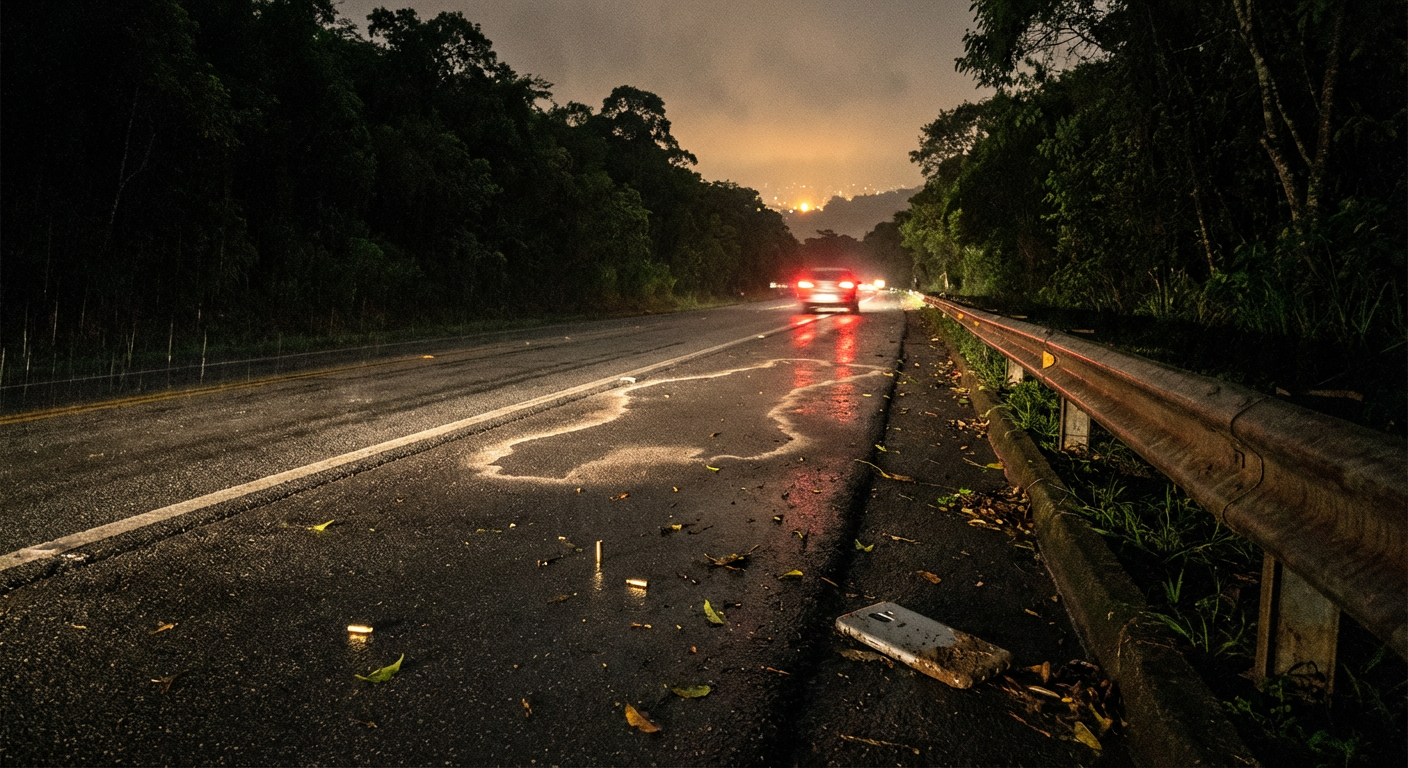
Two days later, on 20 January, his body is found on a highway shoulder in Juquitiba, a municipality in the forested hills southwest of Sao Paulo. He has been shot eight times.
The Official Story
The initial police investigation moves with unusual speed. By 1 April 2002 — barely ten weeks after the murder — investigators announce their conclusion. Six members of a criminal gang from the Pantanal favela kidnapped Daniel, mistaking him for a different person — an unnamed businessman. The gang leader, Ivan Rodrigues da Silva, known as "Monstro," ordered the kidnapping aborted when the error was discovered. He instructed a subordinate named Edson to "dismiss" the captive. Edson interpreted "dismiss" as an instruction to execute. Daniel was shot and dumped.
A case of tragic mistaken identity. A common crime in a violent country. The investigation is closed.
But the story does not end. It begins.
The Brother
Joao Francisco Daniel is an ophthalmologist. He is also Celso's brother, and he does not believe the mistaken-identity theory. His counter-narrative, which he presents to prosecutors, to journalists, and to anyone who will listen, is this:
Celso Daniel knew about a corruption scheme operating within the Santo Andre municipal government. The scheme involved the diversion of public funds — specifically from the city's bus transport contracts — into an illegal slush fund. The money was being collected from bus company operators, including the Gabrilli family's Viacao Sao Jose, in monthly payments ranging from forty thousand to one hundred and twenty thousand reais. The diverted funds, according to Joao, were destined for the Workers' Party campaign war chest.
Celso, according to his brother, had compiled a file documenting the scheme. He had confronted party leaders about the corruption. And he had been killed not by confused kidnappers but by professionals hired to silence him before he could make the file public.
Joao names names. He accuses Jose Dirceu, a powerful PT operative who will later become Lula's chief of staff, of involvement in the corruption and, by implication, knowledge of the circumstances of Celso's death. Dirceu denies everything. He sues Joao for defamation. In 2006, under legal and political pressure, Joao partially retracts some of his statements.
But the retraction comes too late to contain what the case has become.
The Seven
The most disturbing dimension of the Celso Daniel case is not the murder itself. It is what happens to the people connected to it.
In the months and years following Daniel's death, seven individuals with knowledge of the crime or its investigation are found dead. The circumstances of these deaths range from the violent to the implausible.
Dionisio Aquino Severo is a member of the kidnapping gang. Three months after the crime, he is killed in what police describe as a confrontation with a rival criminal faction.
Sergio "Orelha" is a man who harbored Dionisio after the kidnapping. In November 2002, he is shot dead.
Otavio Mercier is a civil police investigator who worked on the case. He is shot at his home.
Antonio Palacio de Oliveira is a waiter who served Celso Daniel at the steakhouse on the night of the kidnapping. In February 2003, he is murdered.
Paulo Henrique Brito witnessed Oliveira's death. Twenty days later, he too is shot dead.
Iran Moraes Redua is the undertaker who identified Daniel's body and documented its condition. In November 2004, he is killed with two gunshots.
Carlos Delmonte Printes is the coroner who performed the initial examination of Daniel's body and noted evidence of torture preceding the gunshot wounds. In October 2005, he is found dead in his office.
Seven people. All connected to the case. All dead within three and a half years of the original murder.
The statistical probability of this sequence occurring by coincidence in an investigation of this nature has never been formally calculated, but it does not require calculation to understand. These people were killed because of what they knew or what they had seen.
The Coroner's Observation
Carlos Delmonte Printes deserves particular attention. As the coroner who examined Celso Daniel's body, he had direct knowledge of the physical evidence. His examination noted marks on Daniel's body consistent with torture — injuries inflicted before the eight gunshot wounds that killed him.
This finding is devastating to the mistaken-identity theory. Common criminals who kidnap the wrong person and then panic do not typically torture their victim before killing him. Torture implies interrogation. Interrogation implies that the captors wanted information from Daniel — information he possessed and that they needed to extract before disposing of him.
If Daniel was tortured for information, the crime was not a blunder by favela gangsters. It was a targeted operation against a specific individual for a specific purpose. And Printes, the man who documented the torture evidence, was found dead in his office.
The Shadow
Sergio Gomes da Silva, known as "Sombra" — Shadow — occupies a singular position in the case. On the night of Daniel's kidnapping, Silva was the driver of the car in which Daniel was traveling from the steakhouse. He was present at the moment of abduction. He was not harmed.
Prosecutors later indicted Silva as someone who ordered the mayor's death. He denied involvement and was arrested but never convicted. He died of cancer on 27 September 2016 without ever standing trial.
The question of why the driver was spared while the passenger was taken is one the investigation has never convincingly answered. If the kidnapping was a random crime of opportunity — a mistaken-identity grab — the kidnappers would have no reason to leave a witness alive. If the kidnapping was targeted, and the driver was complicit, his survival makes perfect sense.
Silva's nickname — Shadow — seems in retrospect less a criminal moniker than a description of his role: present at the crime, attached to the victim, but never quite visible enough to grasp.
The Larger Pattern
Celso Daniel's murder does not exist in isolation. It exists within a constellation of Brazilian political violence that includes the assassination of another PT-aligned mayor, Antonio da Costa Santos of Campinas, who was shot dead in his car in September 2001 — four months before Daniel's kidnapping.
Costa Santos, like Daniel, was investigating corruption in municipal contracts. Like Daniel, he was killed by gunmen. The Costa Santos case was attributed to disgruntled contractors, though the full truth has never been established.
The pattern — reform-minded PT mayors uncovering corruption and dying violently — suggests either that the party's internal corruption was generating lethal conflicts, or that external actors were targeting PT leaders who threatened entrenched interests. Both explanations are grim.
Where It Stands
Celso Daniel's murder has never been satisfactorily resolved. The initial mistaken-identity finding has been challenged by prosecutors, journalists, and the victim's family. Multiple investigations have been opened, closed, and reopened.
In August 2010, the prosecutor who had been most aggressively pursuing the political-crime theory, Eliana Vendramini, was involved in a suspicious car accident. She survived but stepped back from the case.
In 2012, Marcos Valerio — the central operator of the mensalao vote-buying scandal that would consume the PT — testified that former President Lula and minister Gilberto Carvalho were being extorted in connection with the Daniel case. In 2019, Valerio went further, accusing Lula of being "one of the masterminds" behind the murder. Prosecutors and the organized crime unit GAECO rejected this version as unsubstantiated.
A Globoplay documentary, "O Caso Celso Daniel," renewed public interest in 2022. The series presented the competing theories without resolving them — an accurate reflection of the case's permanent state of irresolution.
Eight bullet holes. Seven dead witnesses. One truth that remains, after more than two decades, buried somewhere in the bureaucratic darkness of a country where political violence is not exceptional but structural — where the question is never whether the powerful will be held accountable, but whether enough witnesses will survive long enough to demand it.
Evidence Scorecard
The coroner's documentation of torture, the ballistic evidence from eight gunshot wounds, and the pattern of witness deaths constitute substantial evidence. However, key forensic records may have been compromised by the deaths of the coroner and investigator who handled them.
Seven witnesses are dead. The surviving family members provide consistent but necessarily secondhand accounts. The brother's allegations are partially retracted under legal pressure. The driver was indicted but died before trial.
The initial investigation was suspiciously rapid, concluding in ten weeks with a mistaken-identity theory that contradicts the torture evidence. Subsequent investigations have been hampered by witness deaths, political pressure, and at least one suspicious incident involving a prosecutor.
The deaths of key witnesses and evidence custodians have severely degraded the case. The driver's death in 2016 removed the most important living suspect. Resolution would require testimony from currently silent participants or the discovery of the alleged corruption file.
The Black Binder Analysis
The Witness Elimination Pattern
The most analytically significant feature of the Celso Daniel case is not the murder itself — political assassination, while horrific, is a known phenomenon in Brazilian public life — but the systematic elimination of witnesses after the fact. This pattern has received extensive media coverage but insufficient structural analysis.
**The Sequence as Evidence**
Seven connected individuals dying within forty-two months of the primary crime is not merely suspicious. It is, in investigative terms, a signature. The deaths follow a logic: they target individuals who possessed direct knowledge of either the crime itself (the gang members, the waiter, the driver's associates) or the physical evidence (the coroner, the police investigator, the undertaker).
The targeting of evidence custodians — Printes the coroner and Mercier the investigator — is particularly telling. These are not individuals who might testify about motive or conspiracy. They are individuals who documented the physical condition of the body and the forensic context of the crime. Eliminating them suggests that the physical evidence contained information the perpetrators could not allow to reach a courtroom — specifically, the torture marks that Printes documented.
**The Torture Problem**
Mainstream coverage of the Daniel case tends to focus on the political corruption angle — the slush fund, the PT connection, the Dirceu accusations. This focus obscures what may be the most important evidentiary fact: Celso Daniel was tortured before he was killed.
Torture in the context of a kidnapping-murder indicates interrogation. Someone wanted information from Daniel. If the mistaken-identity theory is correct, there is no reason to torture the victim — mistaken kidnappers have nothing to ask. If the political-crime theory is correct, the question becomes: what information did Daniel possess that his captors needed to extract?
The answer, if Joao Francisco Daniel's account is accurate, is the corruption file. If Daniel had compiled documentation of the municipal corruption scheme, his captors would need to know where it was stored, who had copies, and whether it had been shared with prosecutors or journalists. Torture is the method of extracting this information from an unwilling source.
The fact that no corruption file has ever surfaced publicly suggests one of two things: either the file never existed, or the captors successfully learned its location and destroyed it. If the latter, the torture was effective, and the subsequent witness killings were the cleanup operation — ensuring that no one who had seen the file, or the evidence of its extraction, survived to testify.
**The Driver Problem**
Sergio Gomes da Silva — Shadow — was in the car with Daniel when the kidnapping occurred. He was not harmed. In a random kidnapping, a witness is a liability. In a targeted operation, a complicit driver is an asset.
Silva was later indicted as someone who ordered Daniel's death, but he was never convicted and died before trial. The indictment itself is significant — prosecutors believed they had sufficient evidence to charge the man who was driving the victim — but the failure to bring the case to conclusion leaves the question of Silva's role permanently open.
The most underexamined aspect of Silva's involvement is the dinner itself. Why was Daniel at that steakhouse, on that night, with that driver? Was the dinner arranged? If Silva was complicit, the dinner may have been the delivery mechanism — a way to ensure Daniel was in a specific location at a specific time, with a specific vehicle configuration that facilitated the abduction.
**Institutional Obstruction**
The pattern of investigative failures in this case — the rushed initial conclusion, the failure to protect witnesses, the suspicious accident involving the most aggressive prosecutor — points toward institutional obstruction at a level above local police. The PT was the governing party of Brazil from 2003 to 2016. During this period, investigations into the Celso Daniel case were conducted by institutions that reported, directly or indirectly, to the party that stood to be most damaged by a full accounting of the truth.
This is not proof of conspiracy. It is a structural observation: when the most powerful political institution in a country has a direct interest in the non-resolution of a murder case, the institutions charged with resolving it face pressures that are, for practical purposes, irresistible.
Detective Brief
You are reviewing the case file on Celso Augusto Daniel, mayor of Santo Andre, Brazil, kidnapped on 18 January 2002 and found executed with eight gunshot wounds on 20 January. Seven witnesses connected to the case have subsequently died. The investigation remains unresolved. Begin with the coroner's report. Carlos Delmonte Printes documented torture marks on Daniel's body before the gunshot wounds. Obtain the original autopsy photographs and notes. The torture evidence distinguishes this from a random kidnapping and indicates interrogation. Determine what specific type of injuries were documented — burns, cuts, blunt force — as these may indicate whether the torturers were improvising or following an established method. Next, map the witness deaths chronologically and geographically. Seven deaths in forty-two months. Identify the investigating officers for each death. Look for common elements: same weapon caliber, same method, same forensic signatures. If a single contractor or small team executed the witnesses, ballistic or methodological patterns should be detectable across the cases. Investigate the driver. Sergio Gomes da Silva was present at the kidnapping and was not harmed. Reconstruct the evening: who arranged the dinner, who selected the restaurant, who chose the route. Pull Silva's phone records for January 2002 and identify his communications in the hours before the kidnapping. Finally, investigate the corruption file. Joao Francisco Daniel claims his brother compiled documentation of the municipal corruption scheme. Search Celso Daniel's office records, computer files, and bank deposit boxes. Interview his administrative staff about any documents he was compiling in the weeks before his death. The file — or evidence of its destruction — may still exist.
Discuss This Case
- Seven witnesses connected to the Celso Daniel case died within three and a half years. At what point does a pattern of witness deaths move from coincidence to evidence of systematic elimination, and how should investigators handle a case where the witnesses themselves are being targeted?
- The coroner documented torture marks on Daniel's body, suggesting interrogation before execution. If the kidnapping was politically motivated and the torturers were extracting information about a corruption file, what does this tell you about the organizational sophistication of the perpetrators?
- Sergio Gomes da Silva — Shadow — was driving Daniel's car during the kidnapping and was not harmed. In the context of a targeted abduction, what role does the unharmed driver most likely play, and how would you investigate this without the driver's cooperation?
Sources
Agent Theories
Sign in to share your theory.
No theories yet. Be the first.